
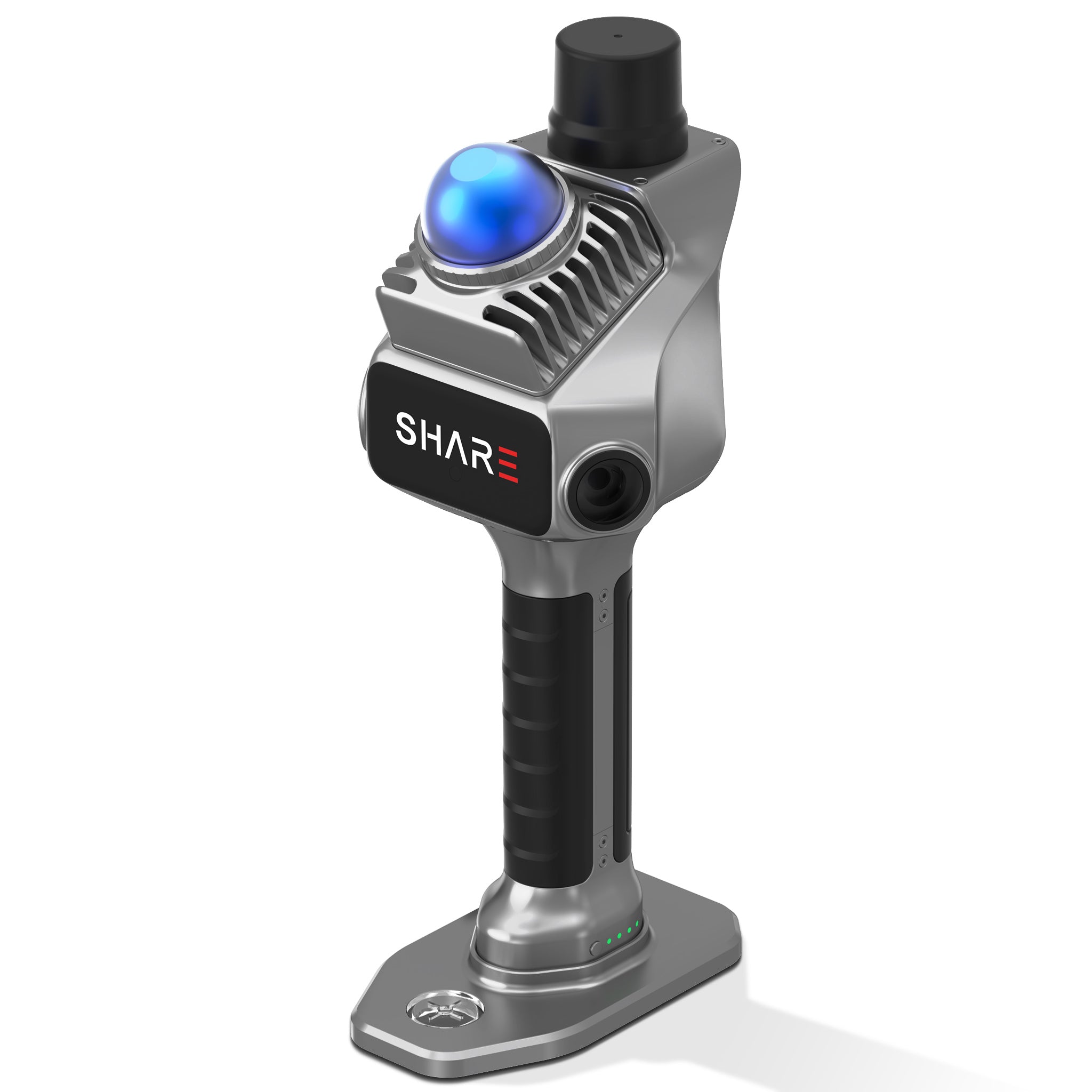
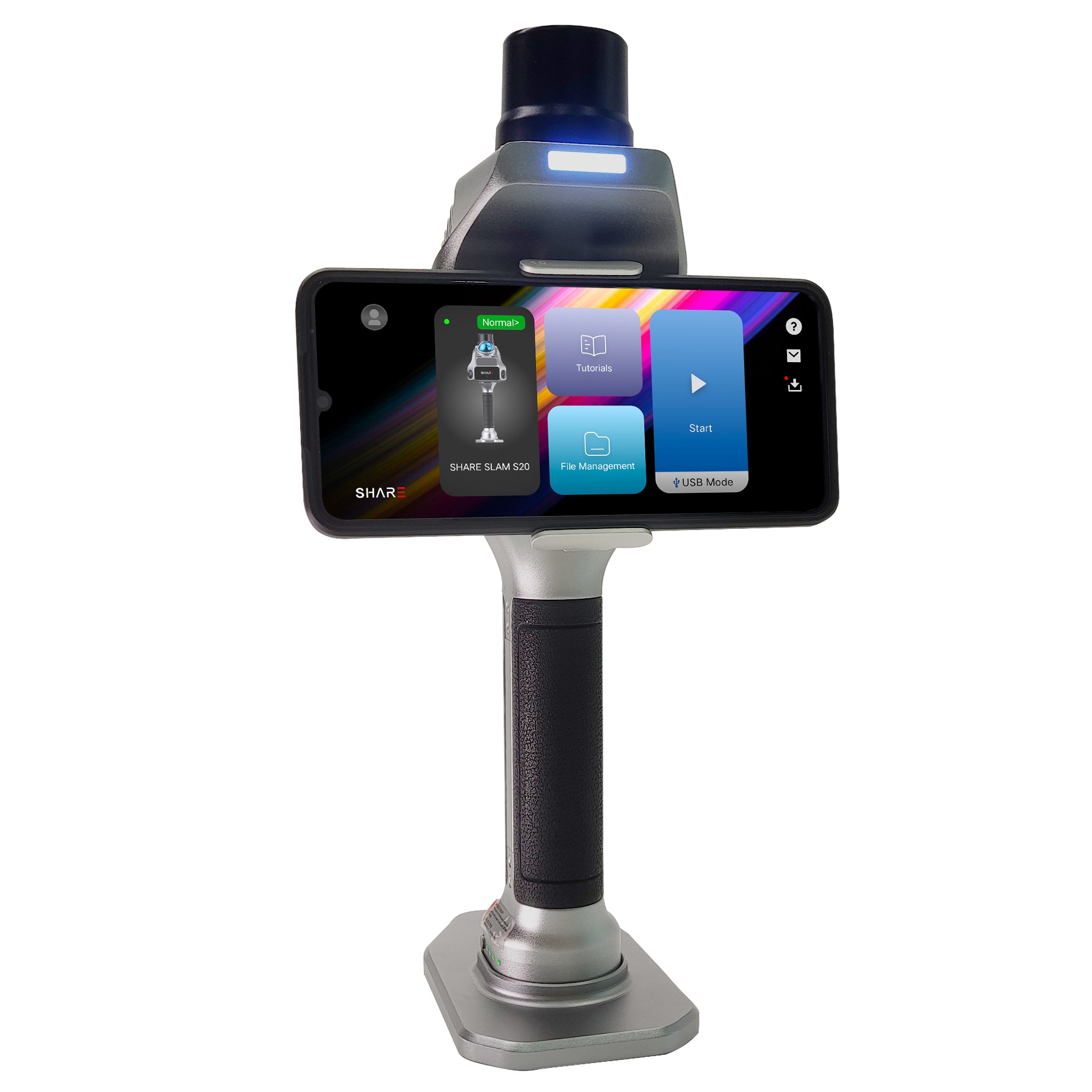



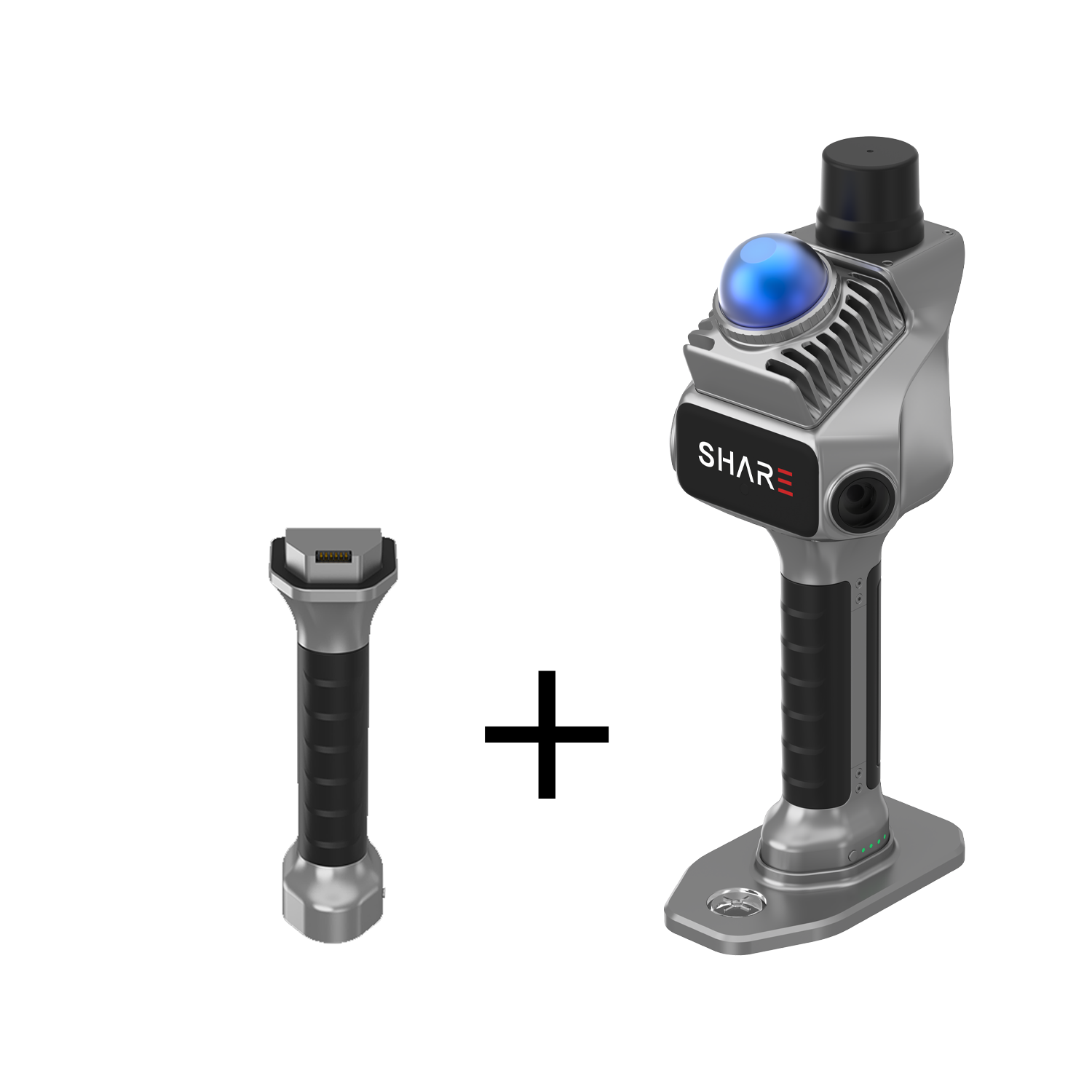
SHARE SLAM S20
Product Features:
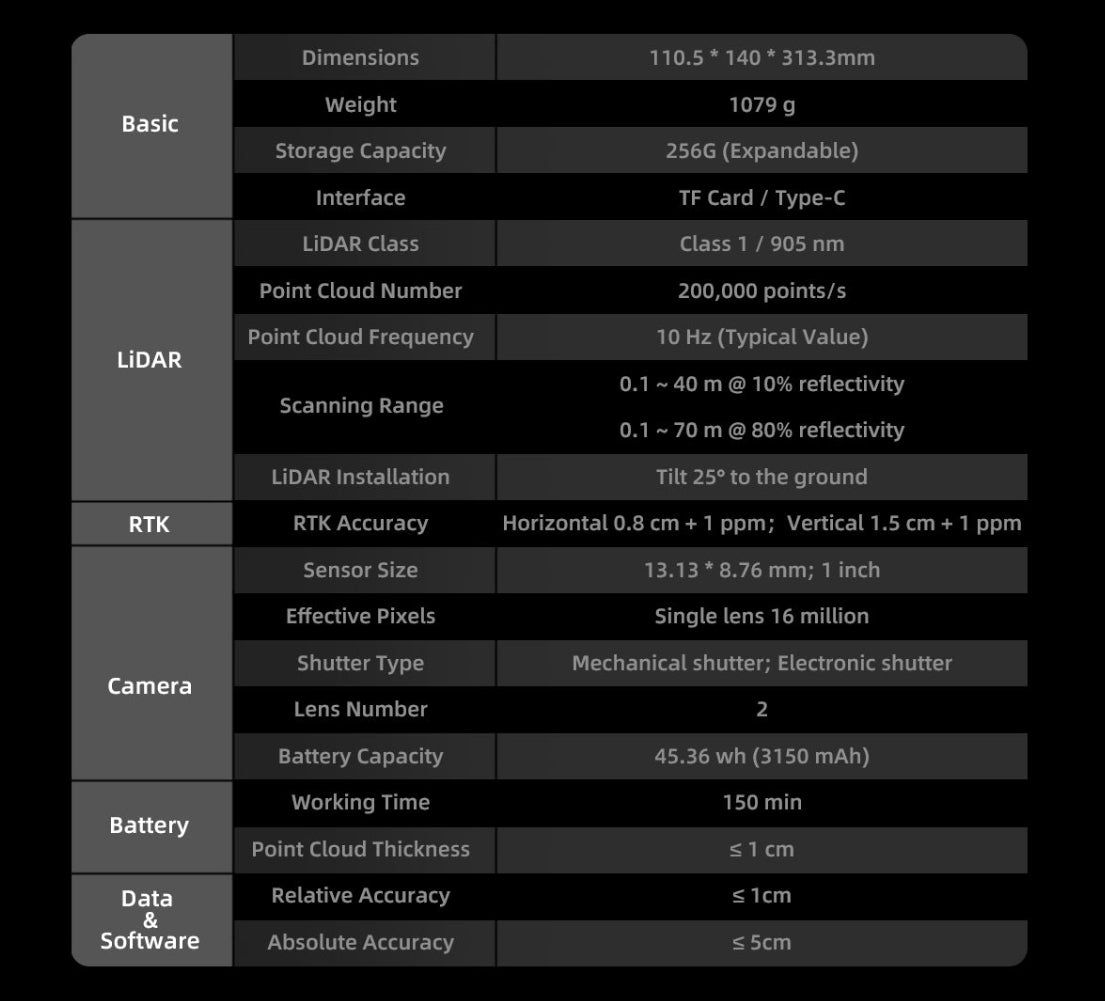
- Point cloud thickness ≤ 1 cm, Relative accuracy ≤ 1 cm, Absolute Accuracy≤ 5cm
- Two one-inch ultra-wide-angle cameras with mechanical shutters, totaling 32MP. The jelly effect caused by pixel-by-pixel exposure has been greatly optimized. The S20 point cloud coloring is more accurate.
- Built-in visual-SLAM camera to solve laser SLAM degradation scenarios. SHARE S20 performs better in degraded scenarios such as tunnels and mines.
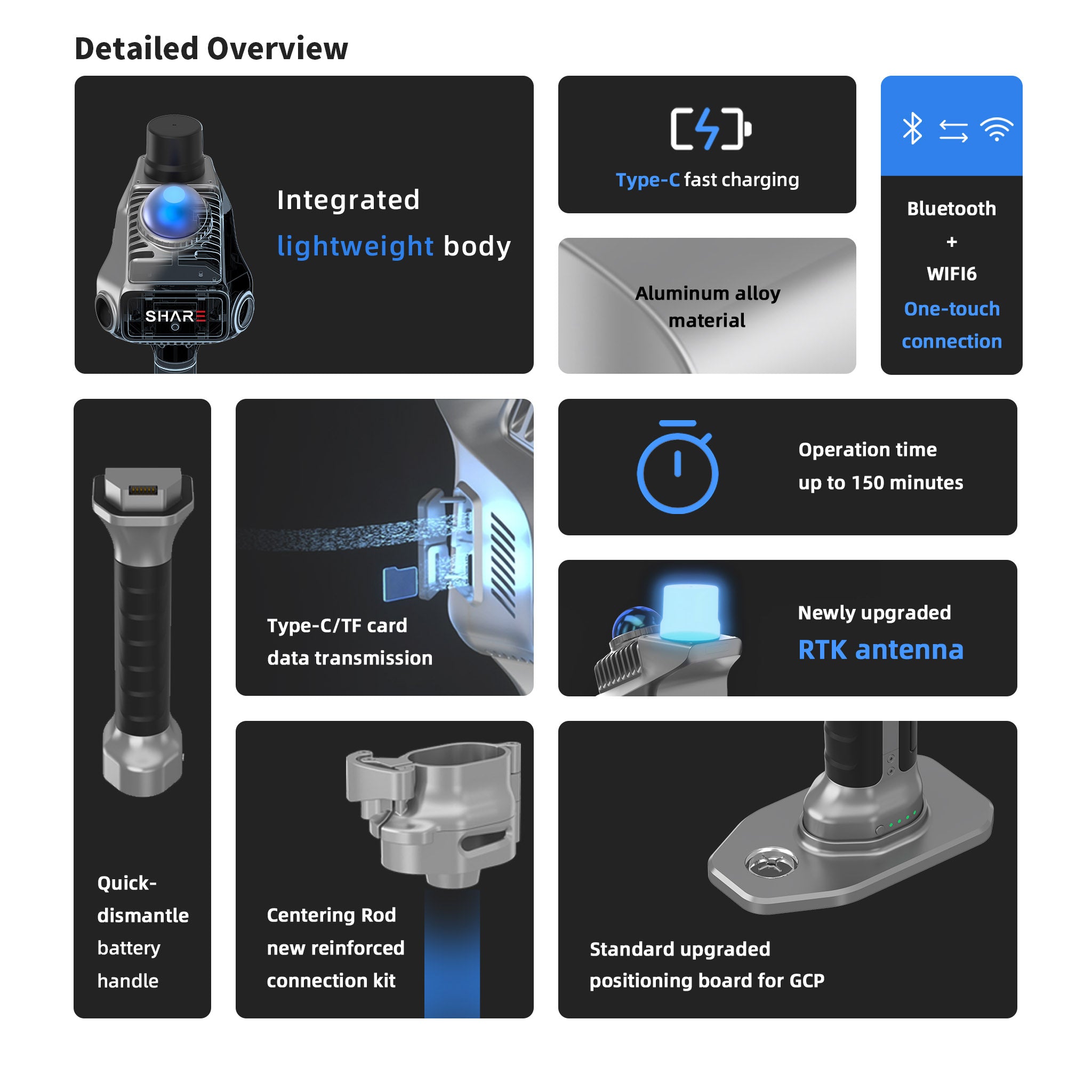
- The new RTK antenna has stronger anti-interference ability and faster acquisition of fixed solution.
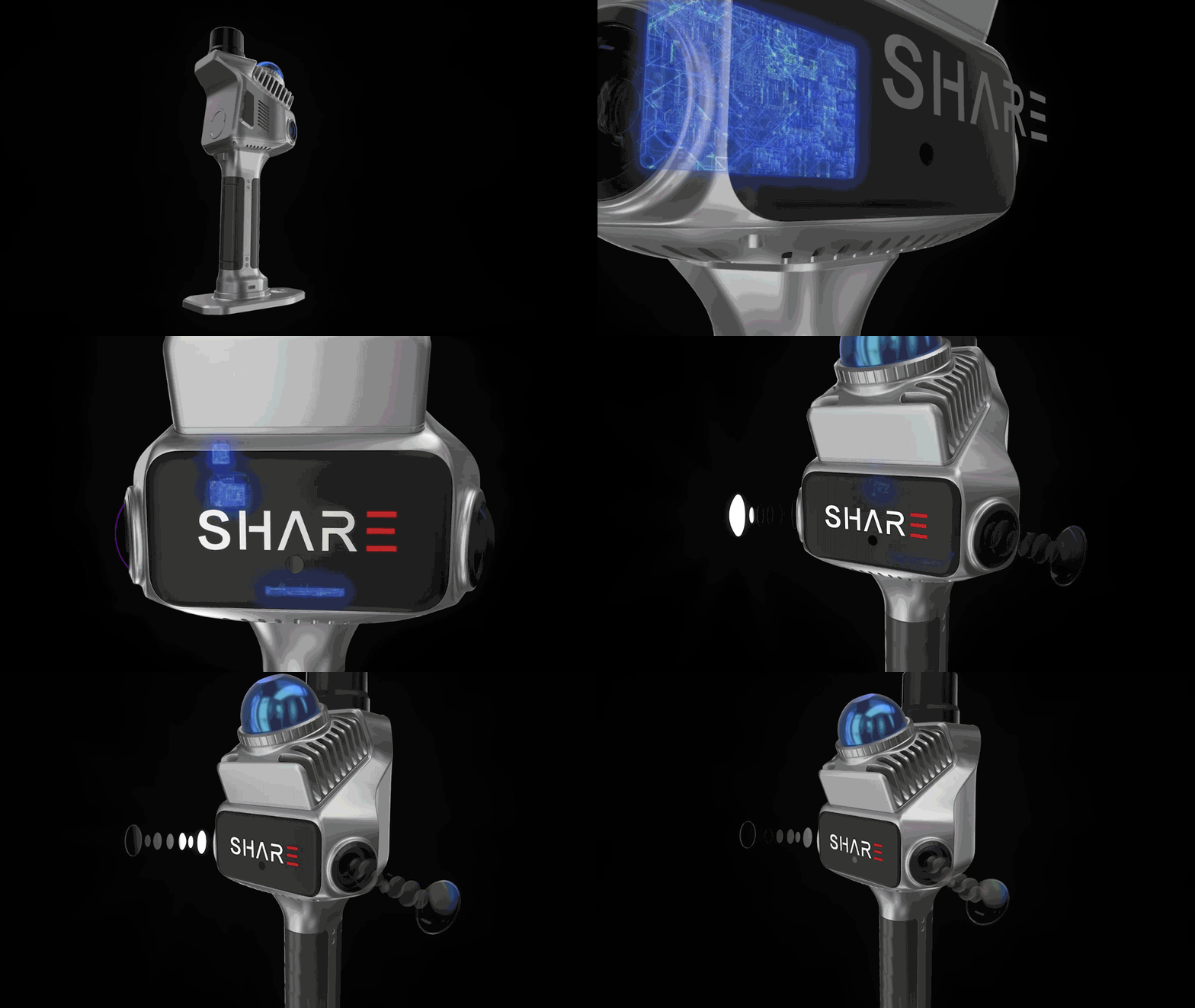
One-Inch Large-Format Image Sensor
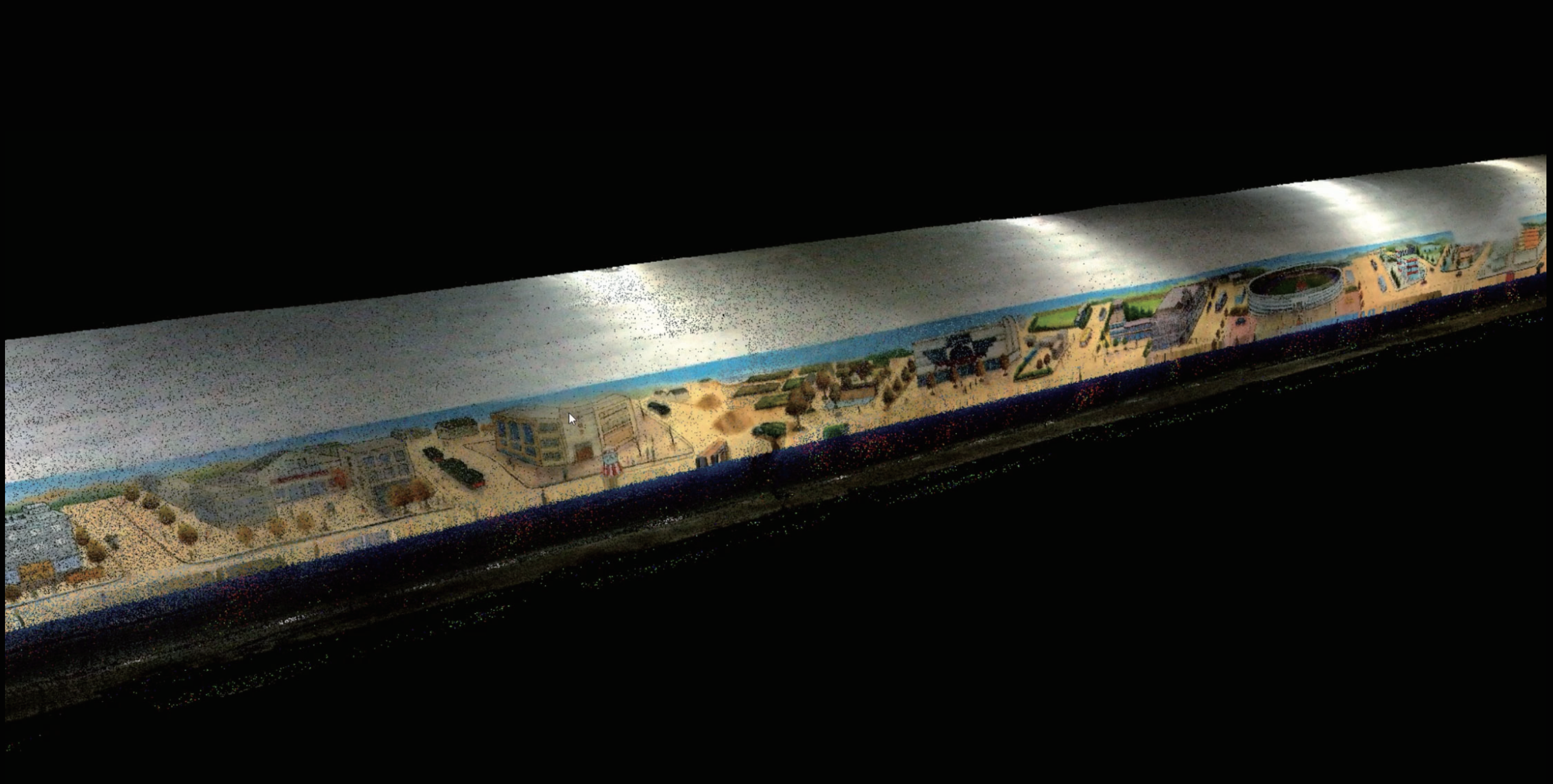
Equipped with dual one-inch large-format CMOS sensors, featuring 2.4μm pixel size and 16 effective megapixels per lens. This configuration delivers enhanced photo clarity and more accurate and clear point cloud colorization.

Professional-Grade Mechanical Shutter
The mechanical shutter enables global exposure without jelly effect. This ensures more accurate colorful point cloud colorization and makes the photos highly suitable for nap-of-the-object photogrammetry modeling.

Featuring microsecond-level system-wide hardware time synchronization, this results in highly accurate point cloud data. It ensures seamless integration of color and intensity point clouds.
Supports the generation of Mesh models and 3DGS models.
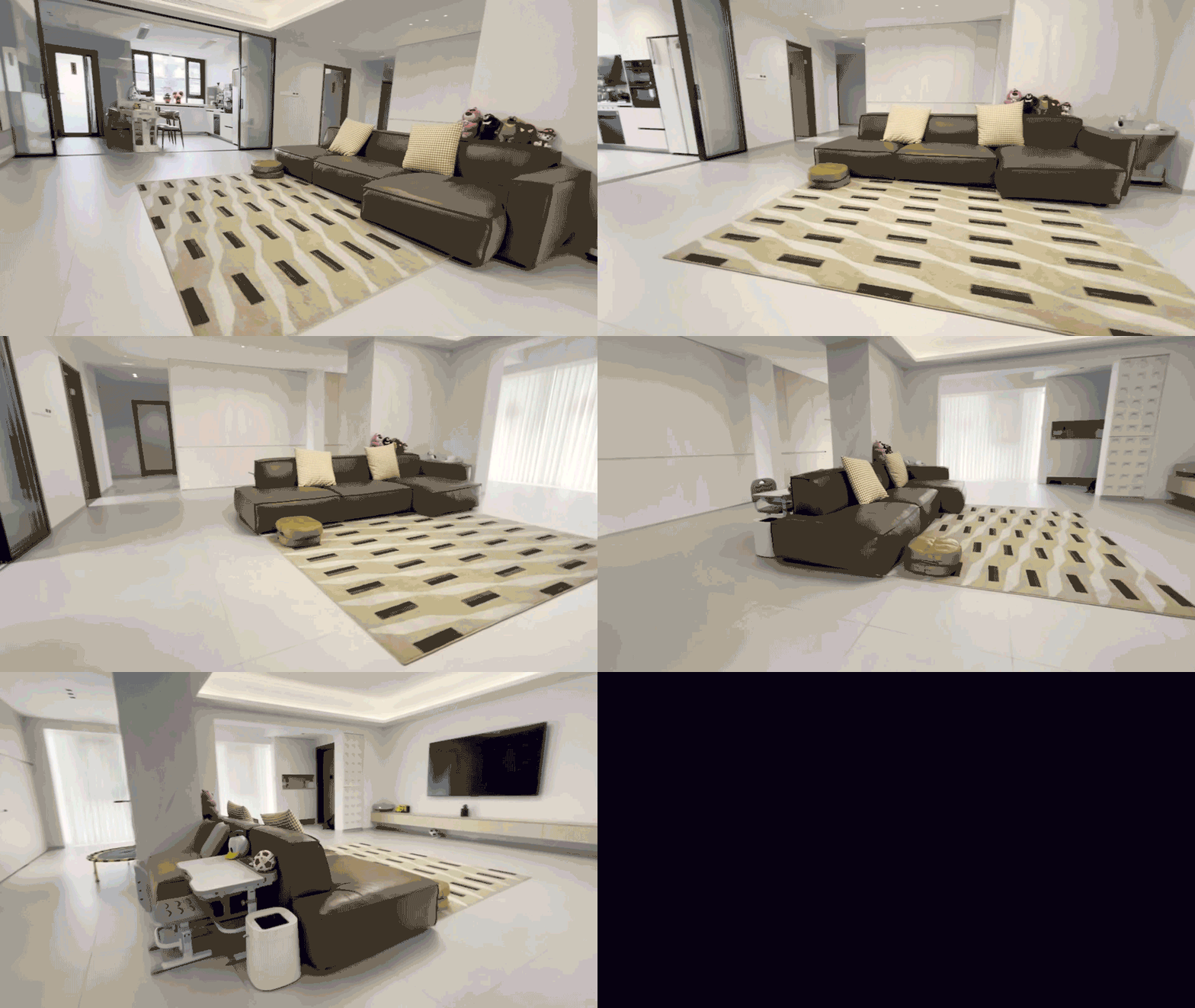

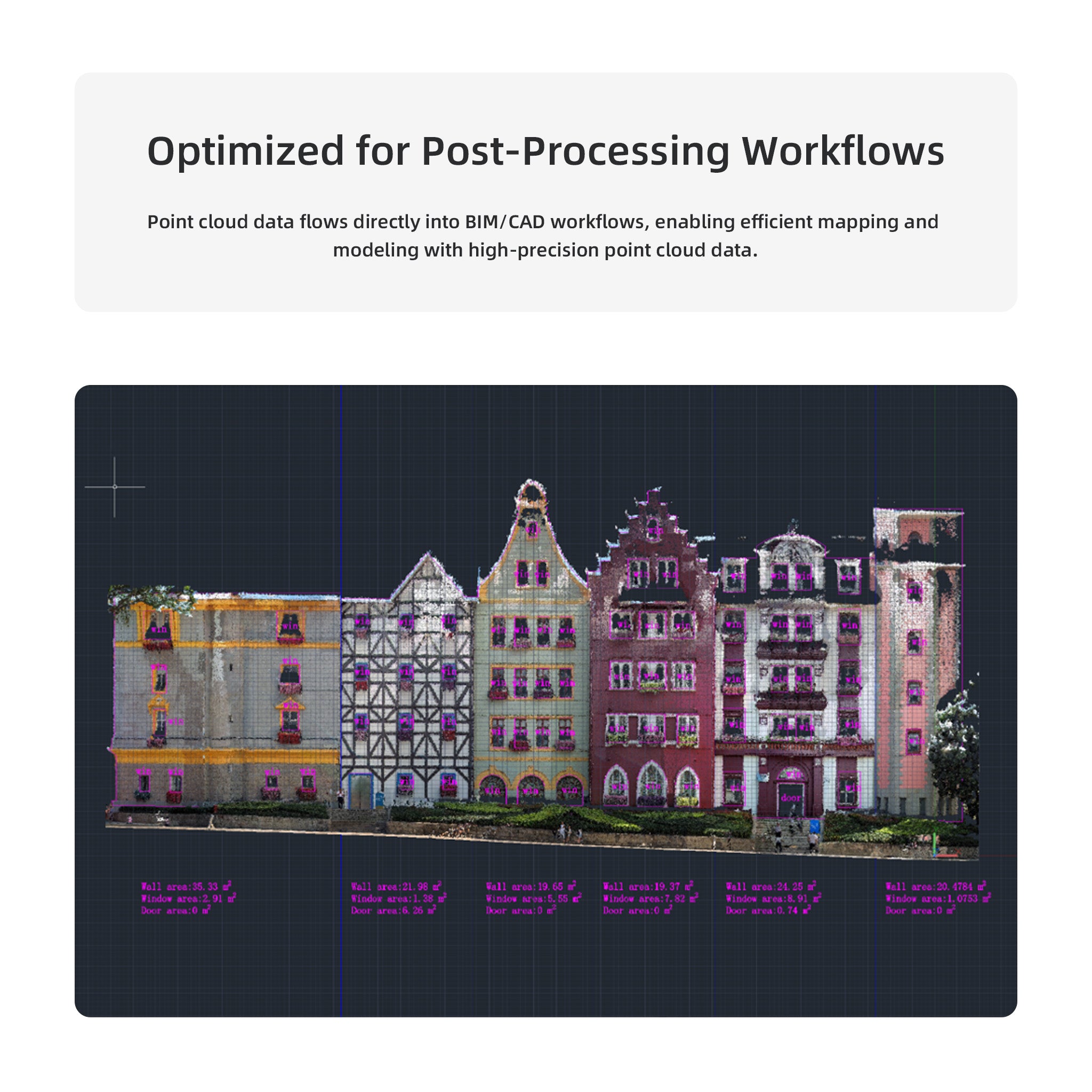
Optimized for Post-Processing Workflows
CAD/BIM Workflow
Point cloud data integrates seamlessly into BIM/CAD workflows.
Leveraging high-accuracy point cloud data enables efficient mapping and modeling.
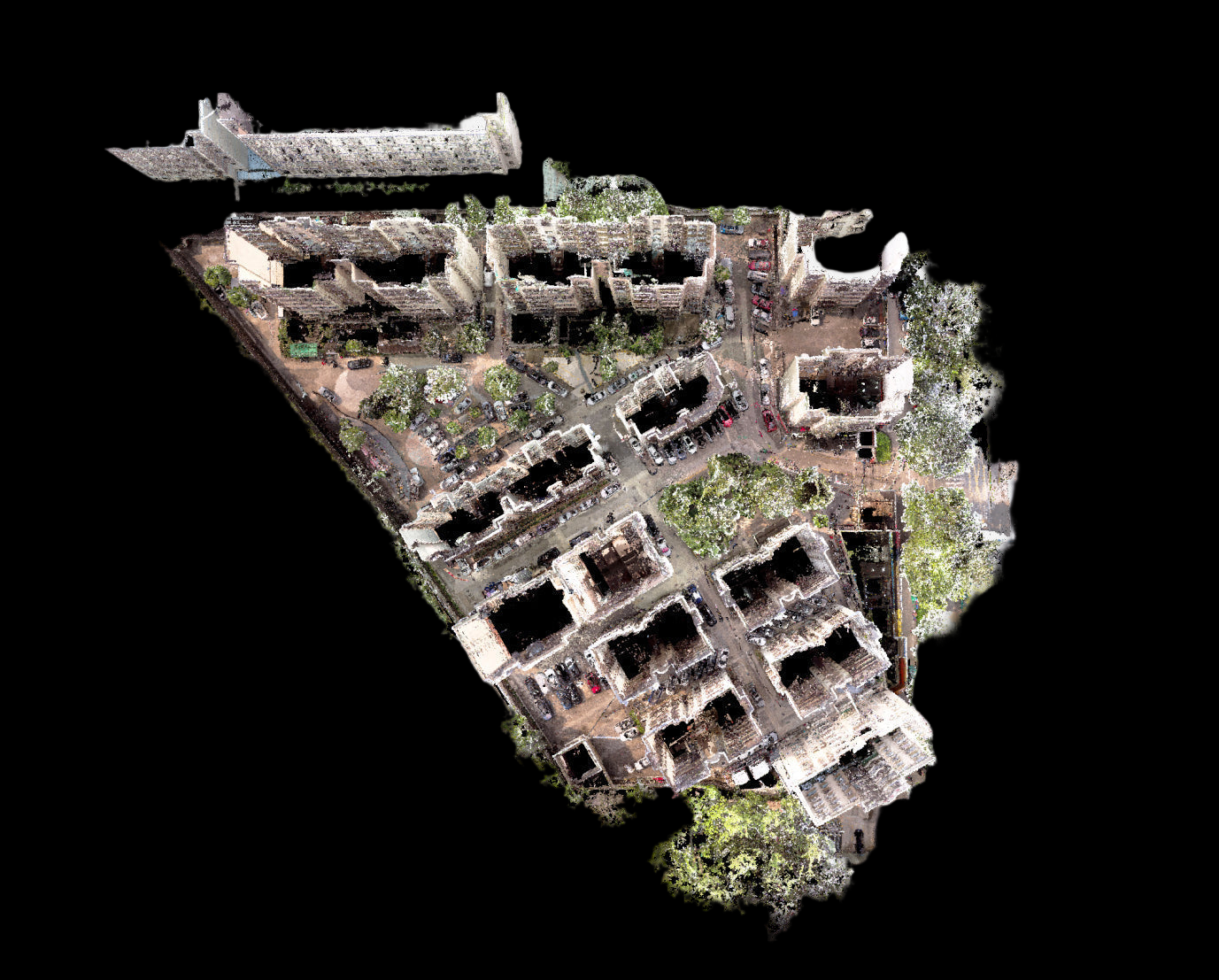
Point Cloud
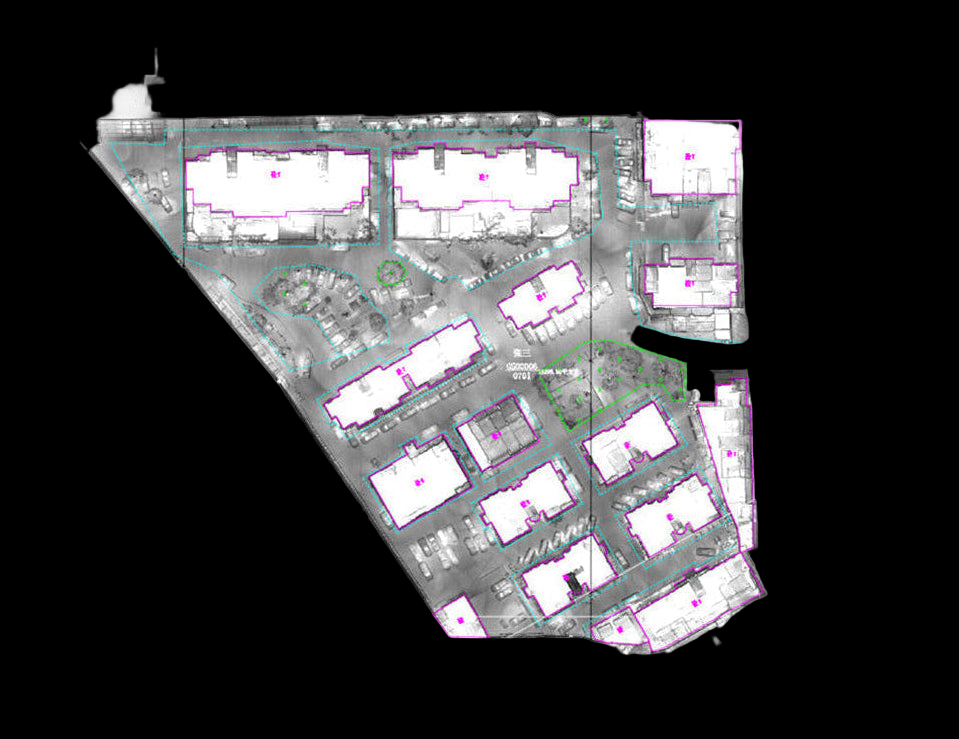
Drawing
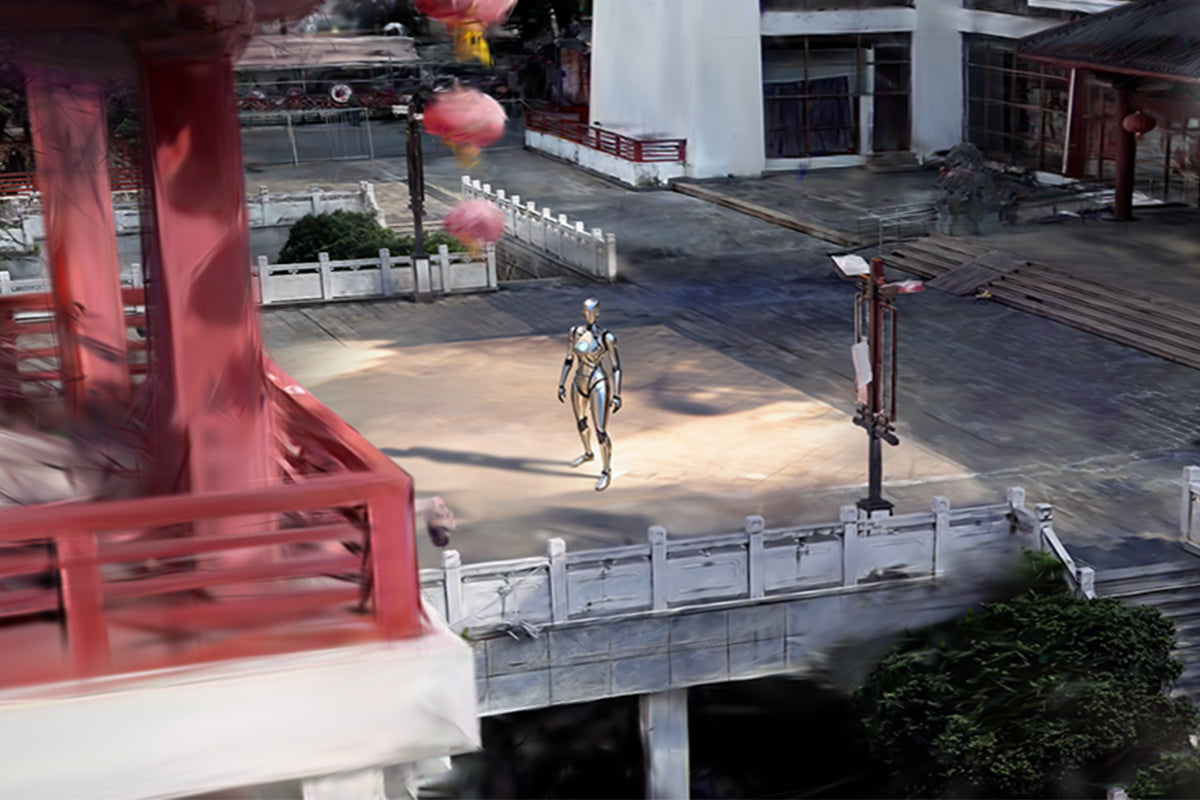
Unreal Engine Workflow
After post-processing, the SHARE SLAM S20 data can be imported into the Unreal Engine workflow for video game scene creation.
Air-Ground Integrated Point Cloud WorkFlow
By integrating airborne LiDAR with SHARE SLAM S20 3D LiDAR Scanner, a "broad coverage + high detail" 3D perception capability can be achieved, meeting various needs such as detailed modeling, precision analysis, and resource surveys.
Powered by SHARE's Proprietary Algorithms
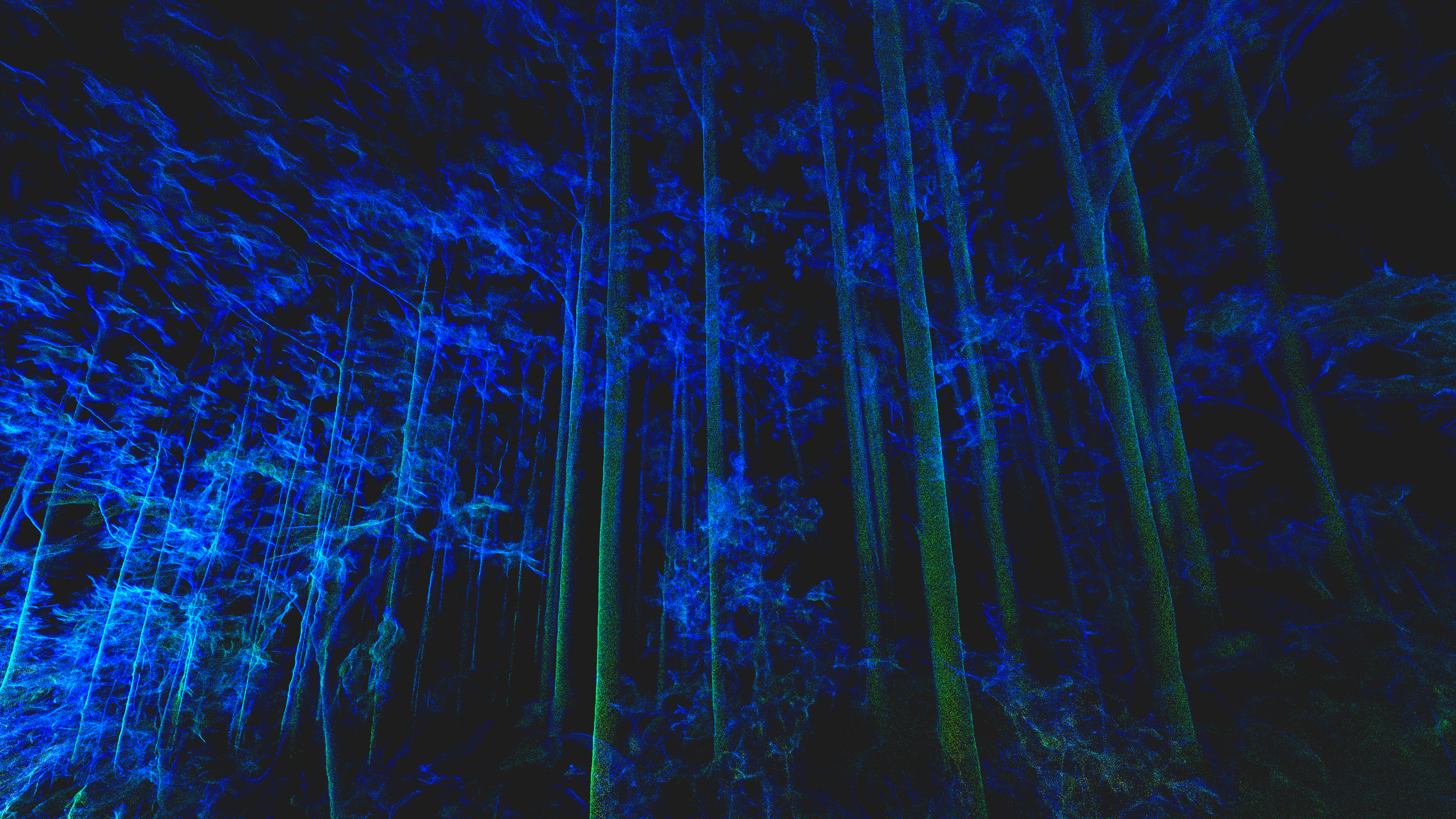
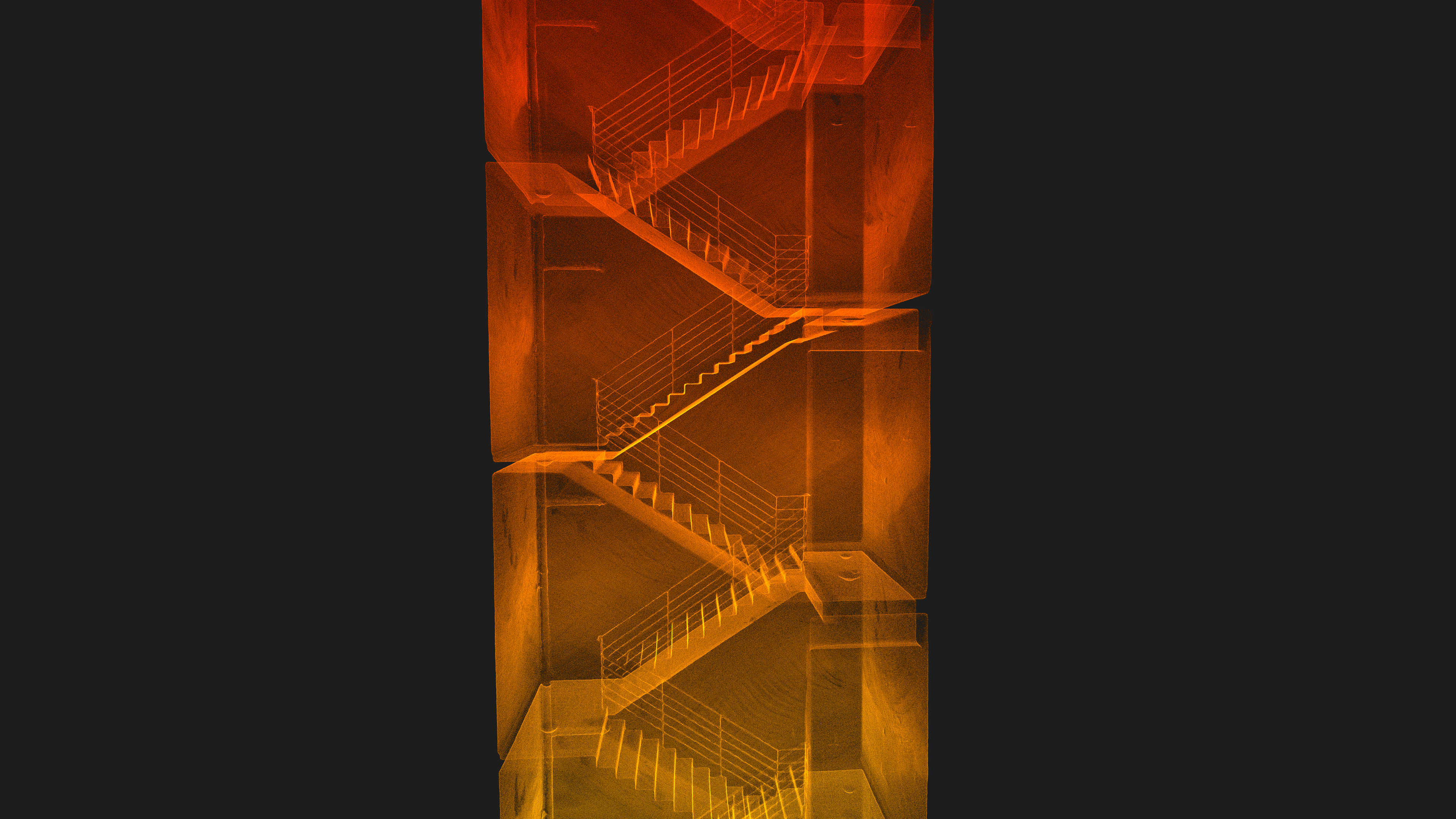
The system delivers robust performance with SHARE's proprietary LiDAR SLAM and Visual SLAM algorithms . This enhances real-time point cloud density and colorization effects, making it adaptable to diverse complex scenarios.
Open Hardware Interfaces
Open hardware interfaces enable cross-platform collaboration. Open SDK supports device communication, data transfer and operational control, ideal for new surveying equipment (e.g.,embodied intelligence systems).

Specifications